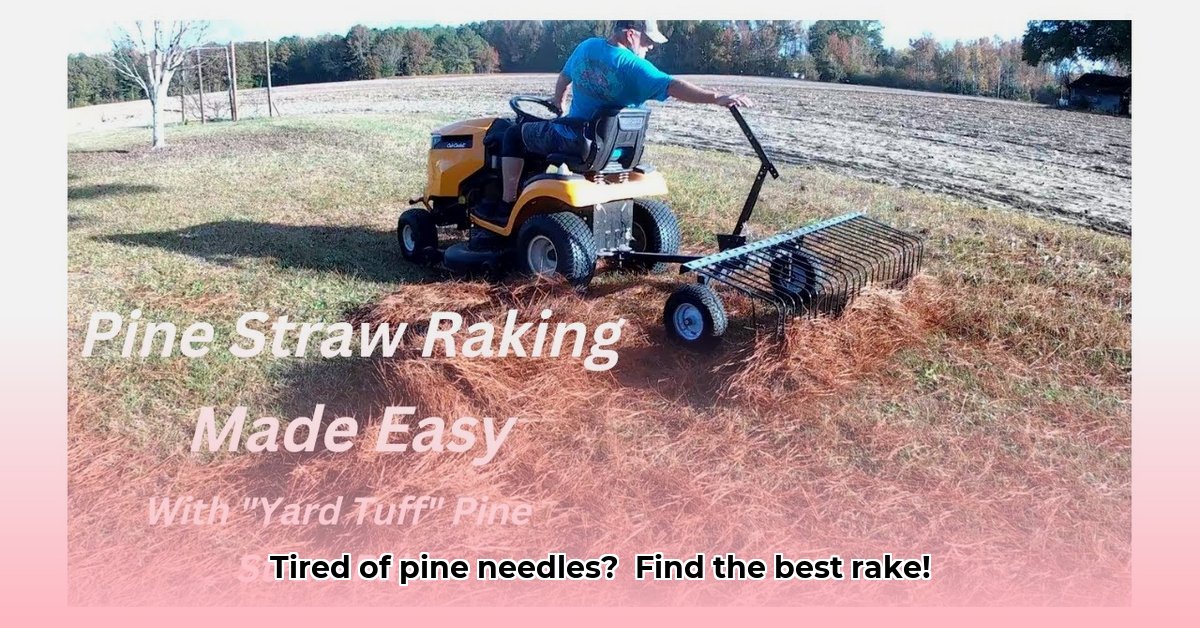
Cleaning up pine needles efficiently is crucial for maintaining healthy landscapes. While manual raking is laborious, tractor-mounted pine needle rakes offer a significant advantage, especially for larger properties. This comprehensive guide will help you navigate the market and choose the ideal rake for your needs and budget.
Understanding Tractor Pine Needle Rakes
Tractor-mounted pine needle rakes are designed to quickly and efficiently clear large areas of pine needles and other light debris. Their effectiveness stems from their ability to collect large amounts of material in a single pass, significantly reducing labor time. Choosing the right rake, however, requires understanding the various types and their respective pros and cons.
Types of Rakes: A Detailed Overview
Several key factors differentiate tractor pine needle rakes. These include the material of the tines, the width of the rake head, and the tractor attachment mechanism.
Tine Material: Steel tines are highly durable and ideal for dense needle removal. However, they are susceptible to rust and require more maintenance. Aluminum tines, while less robust, offer superior corrosion resistance and reduced weight, translating to easier handling. The choice depends on your specific application and budget.
Rake Head Width: Wider rake heads cover more ground per pass, improving efficiency. However, wider rakes demand more powerful tractors. Narrower heads are ideal for tighter spaces and less powerful tractors. Consider the size of your property and the capabilities of your tractor.
Attachment Mechanisms: Almost all rakes utilize a three-point hitch (Category 1, 2, or 3) for attachment to the tractor. Crucially, ensure compatibility between the rake's specified Category and your tractor's hitch. Incorrect attachment can lead to damage or malfunctions.
Pros and Cons: A Balanced Perspective
Before purchasing, it's essential to weigh the benefits and drawbacks of these rakes:
Advantages:
- High Efficiency: These machines significantly increase the speed of needle removal compared to manual labor, saving considerable time and labor. This allows for quicker cleanup and increased productivity.
- Versatility: Beyond pine needles, many models efficiently handle leaves, small twigs, and other light debris. This versatility extends their utility beyond the primary function.
- Ergonomic Benefits: They eliminate the physical strain associated with manual raking, reducing the risk of back injuries and fatigue. This is a significant health and safety benefit.
Disadvantages:
- High Initial Cost: These rakes represent a substantial upfront investment, making them a less attractive option for those with limited budgets. However the long-term savings can offset the high initial cost.
- Maintenance Requirements: Regular maintenance is needed, including cleaning, lubrication, and occasional repairs. These tasks add to the overall cost and time commitment. Ignoring maintenance will shorten the machine's lifespan.
- Potential for Damage: Improper use or contact with hidden obstructions can damage the tines or other components, leading to costly repairs. Carefully following the manufacturer’s instructions is crucial.
Buying Guide: Selecting the Right Rake
Choosing the right rake involves careful consideration of several factors. Follow this step-by-step guide for optimal results:
Assess Your Needs: Determine the size of your property, the density of the pine needles, and your budget. This initial assessment provides the foundation for your decision.
Check Tractor Compatibility: Verify the rake's attachment mechanism is compatible with your tractor's three-point hitch. This crucial step prevents wasted investment and ensures safe operation.
Consider Tine Material: Steel offers superior durability; Aluminum provides weight savings and corrosion resistance. This decision is based on what's more important for your use case.
Select Rake Width: Choose a width that balances efficiency with your tractor's power and maneuverability. This requires a thoughtful consideration of both productivity and safety.
Read Thorough Reviews: Research different models and read independent customer reviews to assess their performance and durability in real-world scenarios.
Compare Prices and Features: Obtain quotes from multiple suppliers and compare prices, warranties, and maintenance provisions before making a decision.
Maintenance and Operation: Maximizing Lifespan
Proper maintenance and operation are crucial for extending the life of your rake and ensuring safe use. Key aspects include:
Regular Cleaning: Remove debris after each use to prevent build-up and potential damage. Neglecting this will lead to faster deterioration of the equipment.
Lubrication: Regularly lubricate moving parts according to the manufacturer's instructions to ensure smooth operation and prevent wear. This is especially important in harsh conditions.
Proper Storage: Store the rake in a dry, covered location to prevent rust and corrosion. Exposure to the elements significantly accelerates deterioration.
Regular Inspection: Inspect the tines, and other components for damage before each use and address any issues promptly. Operating a damaged rake significantly increases the risk of mechanical failure and personal injury.
Cost Analysis: Factors Influencing Ownership Costs
The cost of a pine needle rake varies significantly based on size, features, and brand. Expect to budget from a few hundred to several thousand dollars. Include ongoing maintenance, repair, and potential replacement part costs in your overall budget.
Comparison Table: Key Model Features
(Note: Prices are estimates and can vary based on retailer and model year.)
| Model | Tine Material | Width (ft) | Approximate Cost ($) | Key Features |
|---|---|---|---|---|
| Acme Rake X | Steel | 6 | $400 - $600 | Heavy-duty construction, optimal for dense needles |
| Beta Rake Y | Aluminum | 8 | $600 - $800 | Lightweight, corrosion-resistant, easier handling |
| Gamma Rake Z | Steel | 4 | $300 - $400 | Maneuverable, ideal for smaller properties |
Conclusion: Making an Informed Decision
Investing in a tractor-mounted pine needle rake requires careful consideration of your specific needs, budget, and tractor capabilities. By following this guide and conducting thorough research, you can make an informed decision and select a rake that will efficiently and effectively clear your property of pine needles for years to come. Remember that responsible use and regular maintenance will significantly extend your rake's service life and return on investment.